
Dr. Alan Whitfield, Senior Health and Science Editor.
You are standing in front of the bathroom mirror on a Tuesday, hair flat at the crown and shiny at the part line, and you do not have time to wash it. So you reach for the can that has been sitting in your cabinet since a Sephora haul three months ago, spray a cloud of it somewhere near your scalp, and hope. Most people use dry shampoo roughly this way, and most people are getting less than half of what the product can actually do. One fact worth knowing before anything else: dry shampoo does not clean your hair. It is a starch or clay that grabs oil molecules and holds them so they stop reflecting light, which is why hair looks less greasy but is, chemically, just as oily underneath. Understanding that single mechanism changes almost everything about how to use the stuff well.
- Dry shampoo absorbs oil, it does not remove it, which is why timing and placement matter more than how much product you use.
- Application technique fixes most complaints, including white cast and flat roots, before any change of product is needed.
- Scalp health, not hair shine, is the real limit on how often dry shampoo should stand in for an actual wash.
What Is Actually Happening When You Spray It On
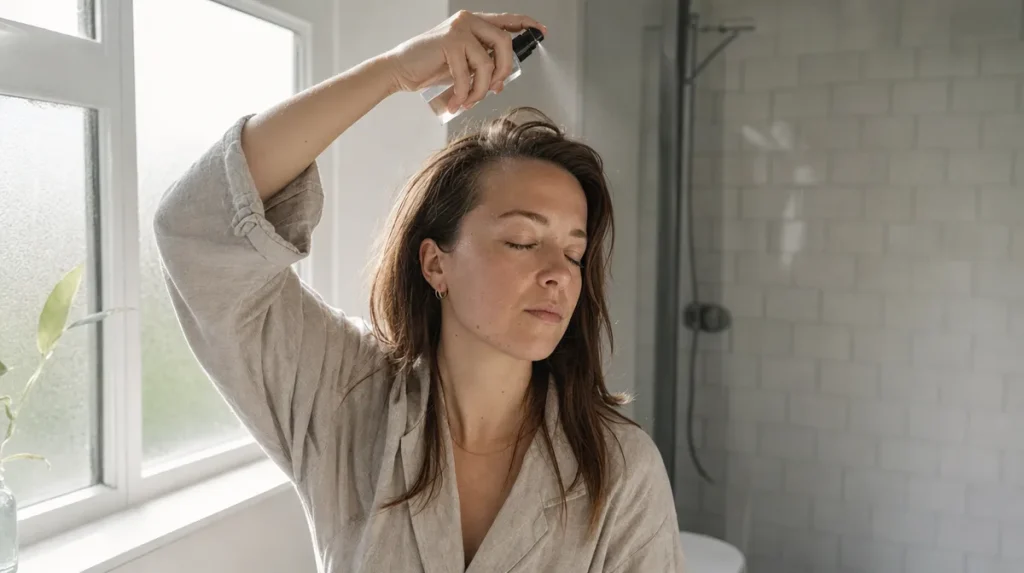
Dry shampoo is, at its core, a fine powder: usually a rice or corn starch, sometimes a clay like kaolin, occasionally silica. When it lands on the scalp and upper hair shaft, it behaves the way a paper towel behaves on a greasy countertop. It does not dissolve the grease. It soaks it up and holds it inside its own structure, and the counter looks clean because the oil is no longer sitting on the surface catching light.
That is the whole trick. Hair looks less oily because the light stops bouncing off a slick surface, not because the oil is gone. A 2019 study in the International Journal of Trichology measured this directly, finding that starch-based dry shampoos reduced visible sebum shine by a measurable margin within minutes of application, while sebum production itself was unaffected.
This matters because it sets expectations correctly. Dry shampoo is a cosmetic fix for how hair looks, not a substitute for washing it. It buys time. It does not turn back the clock on oil that has already built up over two or three days.
Reading The Can Before You Spray
Not all dry shampoos work the same way, and the can usually tells you which category you are holding if you read the ingredient list rather than the front label. Aerosol versions disperse the powder in a fine, even cloud through a propellant, which is why they tend to leave less visible residue. Powder versions, applied by hand or with a brush attachment, give more control over placement but are easy to overdo. Foam and paste versions distribute more like a styling product and are worked in at the roots before the hair is brushed out.
Ingredient labels are also where the real difference between formulas shows up. Rice starch and tapioca starch tend to sit more invisibly on lighter hair. Kaolin clay, often marketed for oilier scalps, absorbs more oil per application but can feel heavier if overused. Tinted versions add iron oxides to match hair color from light blonde through deep brunette shades, which genuinely helps with the white-cast problem discussed further down.
The Good Housekeeping Institute has long tested absorbency and residue across dry shampoo formulas as part of its general product testing coverage, and its published findings consistently note that application technique affects visible results as much as formula choice does. That lines up with what a chemist would expect: the powder can only do its job where it actually lands.
The Five-step Method That Actually Works
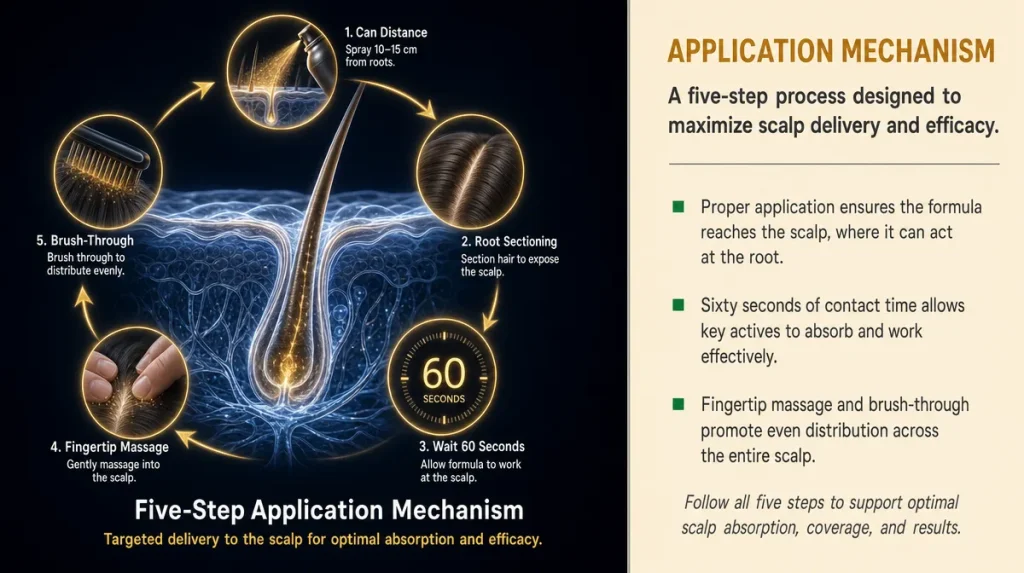
Most of the disappointment people report with dry shampoo comes down to five small technique errors, all fixable in under a minute.
First, shake or prime the can according to the label. Second, part the hair into sections rather than spraying over the top of a full head; oil concentrates at the roots and the crown, so that is where the product needs to land, not two inches out from the scalp. Third, hold the can six to eight inches away. Closer than that and the powder arrives wet and clumped rather than fine.
Fourth, and most skipped: wait. Give the starch sixty to ninety seconds to actually absorb oil before doing anything else. Fifth, work it in with fingertips at the roots, then brush through with a natural-bristle brush, which distributes any excess down the shaft and off the scalp entirely, rather than leaving it to sit as visible powder.
Skipping the wait step is the single most common mistake, because it means brushing through oil that has not yet been absorbed, which just spreads grease rather than lifting it.
The Mistakes That Quietly Undo The Whole Point
Beyond rushing the wait time, three habits show up again and again. The first is spraying dry shampoo onto hair that is already visibly oily on day three or four, expecting one application to reverse days of buildup. Dry shampoo works best as prevention, applied the night before or the morning of a slightly oily day, not as rescue for hair that has already gone flat.
The second is applying it to the ends of the hair, where there is little oil to absorb in the first place, while neglecting the crown and hairline where oil actually concentrates. The third is treating dry shampoo as a leave-in styling product indefinitely. Layering it day after day without ever washing it out lets the starch itself build up on the scalp alongside natural oil, dirt, and any styling product residue underneath.
That buildup is where complaints about itchy scalp and dullness usually originate, and it is worth separating from any claim about the ingredient causing harm. The starch is inert. The problem is accumulation, the same way flour left on a countertop for a week is not dangerous, it is just there, attracting whatever settles on top of it.
White Cast, Dark Hair, And Other Color Realities
Anyone with brunette, black, or deep red hair has likely met the chalky gray-white film that untinted dry shampoo can leave at the roots, especially right after spraying and before brushing. This is simply the powder itself, visible because it has not yet been worked into the hair or given time to blend with natural oil and pigment.
Tinted dry shampoos solve most of this by adding a small amount of pigment matched loosely to light, medium, or deep hair tones, the same logic drugstore foundation uses for fair through deep skin. Even with a tinted formula, brushing thoroughly after the wait period is what actually clears any residual cast, tint or not.
A quick self-test: spray a small amount onto the underside of one section near the nape, wait the full ninety seconds, then run a comb through it under a mirror in daylight, not overhead bathroom light, which tends to wash out color differences. If cast is still visible after brushing, the fix is almost always more brushing, not a different can.
Marketing Words Versus What Is Actually In The Bottle
Cans compete for attention on a crowded drugstore shelf, so the language on the front tends to run ahead of the chemistry inside. Terms like volumizing, texturizing, and refreshing describe real effects, but they come from the same starch base doing the same job: adding grip and lift by roughening the hair’s surface slightly as it absorbs oil, which is why hair often feels bigger after a dry shampoo application even without any styling product added.
Fragrance is the other major selling point, and it is worth knowing that scent has no bearing on how well a formula absorbs oil. A heavily fragranced can may simply be masking odor rather than absorbing more sebum, which matters for anyone choosing between a lighter, fragrance-free option and a seasonal pumpkin-spice-scented release that shows up every fall.
“Clean” or “natural” labeling on starch-based formulas is largely a marketing distinction rather than a performance one: cornstarch is cornstarch whether it is packaged as a clean-beauty holy grail or a basic drugstore staple. The Journal of Cosmetic Science published a 2023 formulation review noting that absorbency differences between commercial dry shampoos were driven far more by particle size and propellant delivery than by any single marketed ingredient.
Knowing When It Is Actually Time For Water
Dry shampoo is a bridge, not a replacement, and the scalp gives signals worth listening to. The American Academy of Dermatology’s general public guidance on scalp care notes that a healthy washing frequency depends on hair type, activity level, and scalp oil production, and that signs like persistent itching, flaking, or a noticeable odor point toward an actual wash rather than another layer of powder.
Climate plays a real role here too. Humid East Coast summers tend to push oil production and sweat higher, shortening the useful window between washes, while dry winter air paired with indoor heating often does the opposite, letting some people stretch two dry-shampoo mornings into three. There is no universal number of days that works for every scalp.
A simple self-check: press a clean tissue lightly against the scalp at the part line first thing in the morning. Visible oil transfer after just one day suggests dry shampoo should be doing light maintenance work, not carrying multiple days on its own. If irritation or flaking shows up, that is a scalp signal, not a dry shampoo problem, and it is worth mentioning to a dermatologist if it persists.
Key Takeaways
Dry shampoo absorbs oil rather than removing it, so it works best applied ahead of visible grease, not after. Technique, meaning distance, wait time, and brushing, changes results more than any single formula choice. White cast is almost always a brushing problem before it is a product problem. And the scalp, not the calendar, should decide how many days a formula gets to stand in for an actual wash.
A Quick Pre-flight Checklist
- Shake or prime the can fully before the first spray
- Section hair and aim at roots and crown, not the ends
- Hold the can six to eight inches from the scalp
- Wait sixty to ninety seconds before touching or brushing
- Brush thoroughly with a natural-bristle brush to clear any cast
- Watch for itching, flaking, or odor as the real signal to wash, not the day count
- Choose a tinted formula if hair falls in the medium-to-deep range and untinted powder leaves visible cast
This article is for general informational purposes and is not a substitute for personalized advice from a dermatologist.
Individual results vary depending on hair type, scalp condition, and climate.