
Dr. Alan Whitfield, Senior Health and Science Editor.
There is a bottle of micellar water in nearly every bathroom cabinet in America, usually half empty, sitting next to three others that promised something slightly different. It got there because someone, somewhere, told you it was the easy answer: swipe a cotton pad, skip the sink, go to bed. Then a month later your skin looks dull, a little congested along the jaw, and you are standing in front of the mirror wondering if the product betrayed you or if you were using it wrong the whole time.
Most likely, it is the second one. Micellar water is a genuinely clever formula, tiny oil molecules called micelles suspended in soft water, built to lift dirt and makeup without a hard scrub. But it was designed for a specific job, done a specific way, and most people use it like a magic eraser for everything. Here is the useful fact to start with: dermatologists and formulation chemists consistently point out that micellar water was never meant to be a final cleanse on its own for most skin types. It is a first step. Treating it as the whole routine is where most of the trouble starts.
This guide walks through where people go wrong with micellar water, why the mistakes happen, and how to fix each one without buying anything new.
- Micellar water is a first cleanse, not a finish: skipping the rinse or the second cleanse is the single most common reason skin feels fine at night and looks tired by morning.
- Rubbing undoes what the formula is built to do gently: dragging a cotton pad across the face can disturb the skin barrier more than the makeup residue ever would.
- Not all micellar waters suit all skin: fragrance, alcohol content, and micelle concentration vary widely, and matching the formula to your skin type matters more than the brand on the label.
What Micellar Water Is Actually Doing On Your Skin
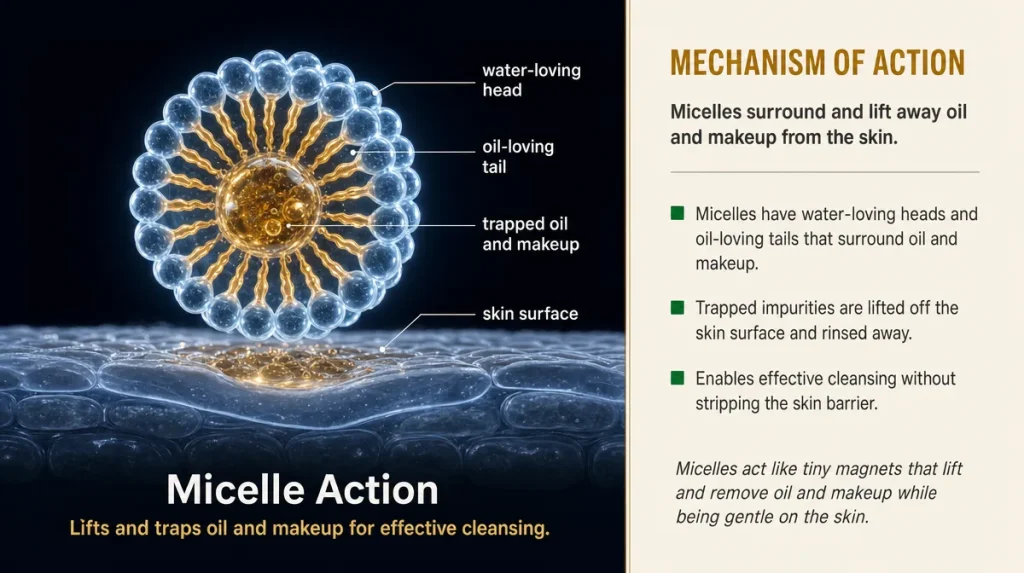
Micelles are small clusters of surfactant molecules that arrange themselves with their oil-loving ends facing inward and their water-loving ends facing outward. Dropped onto a cotton pad and swept across the face, they surround particles of makeup, sunscreen, and sebum and lift them away, a bit like how a magnet gathers metal filings without anyone having to pick each one up by hand.
That is the appeal: no hard scrubbing, no suds, no rinse required in theory. But “in theory” is doing a lot of work in that sentence. The micelles are only as good as the contact time and the amount of product used, and most people use far less than the formula needs to do its job properly on a full face of makeup or sunscreen.
A 2021 study in the International Journal of Cosmetic Science comparing cleansing methods found that micellar water removed a smaller percentage of long-wear and waterproof makeup than an oil-based cleanser followed by a water rinse, particularly around the eye area. That does not make micellar water useless. It makes it a tool with a job description, and the job description does not include waterproof mascara or a full day of SPF 50.
The Rinse-or-no-rinse Mistake
Ask ten people whether you are supposed to rinse off micellar water and you will get ten different answers, which tells you something about how confusing the marketing has been. The honest answer: it depends on the formula and your skin type, and the bottle rarely spells this out clearly enough.
Formulas aimed at sensitive or dry skin tend to be lower in surfactant concentration and are generally fine left on, especially overnight for a quick refresh. Formulas marketed for oily or acne-prone skin, or anything labeled for waterproof makeup removal, usually carry a higher surfactant load, and leaving that residue on the skin overnight can contribute to clogged pores and a dull, slightly tacky feel by morning.
The fix is simple and costs nothing: if your skin feels the least bit filmy or tacky a few minutes after using it, rinse with water or follow with a second cleanser. If it feels normal and comfortable, you can likely skip the rinse on that particular formula. Dermatologists often describe this as the difference between a quick refresh and an actual cleanse, and conflating the two is where a lot of nightly congestion starts.
Why Rubbing Harder Is Not The Answer
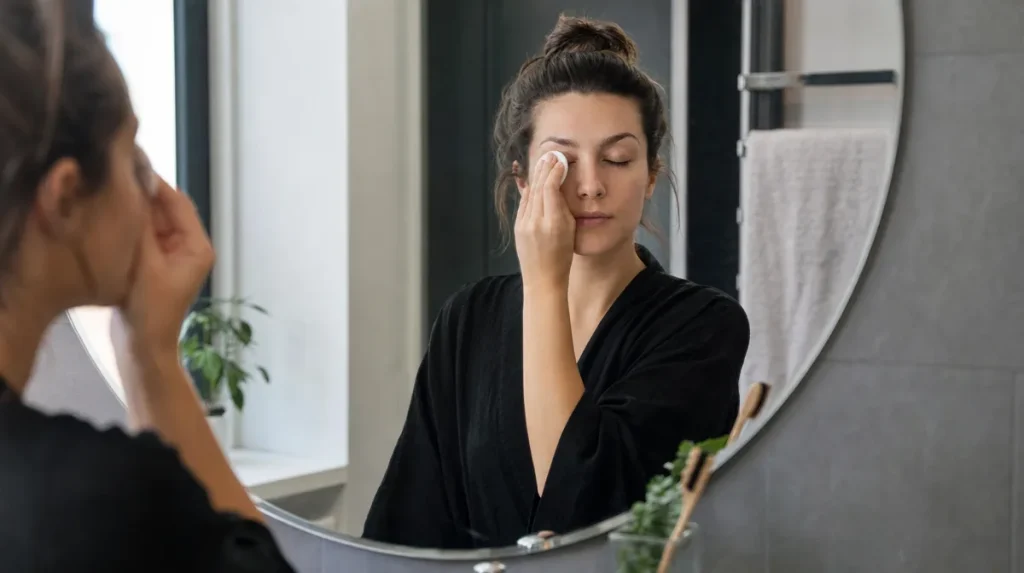
When a cotton pad swiped once does not fully remove eye makeup, the instinct is to press harder and go over the area again, and again. This is the most physically damaging habit tied to micellar water, and it has nothing to do with the formula itself.
The skin around the eyes is thinner than anywhere else on the face, with fewer oil glands and less structural support. Repeated dragging, especially in a side-to-side motion, can contribute to irritation, broken capillaries, and over time may accelerate the fine creasing some people associate with aging skin, according to dermatologic research on mechanical skin stress.
The better method: saturate the cotton pad generously, press it against closed eyes for ten to fifteen seconds to let the micelles do the dissolving, then wipe gently in one direction rather than scrubbing back and forth. If mascara still will not budge, that is a sign to add a dedicated eye makeup remover rather than keep pressing with the same pad. Patience, not pressure, is the actual mechanism at work here.
Using It As Your Only Cleanse, Every Single Night
This is the habit most likely to catch up with someone slowly, over weeks rather than days. A quick swipe of micellar water feels like cleansing, and for a light, no-makeup day it may genuinely be enough. But on a day with sunscreen, foundation, or substantial oil buildup, a cotton pad swipe leaves behind a measurable residue, even when the skin looks clean to the eye.
The American Academy of Dermatology’s public guidance on cleansing routines recommends a water-rinse step as part of a thorough daily cleanse, particularly for anyone wearing sunscreen or makeup regularly, since residue left on the skin overnight can contribute to clogged pores over time.
A workable standard many estheticians suggest is the double cleanse: micellar water or a similar product first to break down makeup and sunscreen, followed by a gentle water-based cleanser to actually lift that dissolved residue off the skin and down the drain. It takes an extra ninety seconds. The payoff shows up over weeks, not overnight, in fewer clogged pores along the jaw and less of that end-of-day dullness.
Matching The Formula To Your Skin, Not The Shelf Display
Micellar waters are not interchangeable the way the drugstore aisle suggests. Formulas vary in micelle concentration, in whether they include glycerin or soothing extracts, and in whether they are fragrance-free or lightly scented, and those differences matter more than which display they sit on.
Think of it the way you would think of laundry detergent: a formula built for heavily soiled work clothes is overkill, and potentially irritating, for a delicate blouse. Dry or sensitive skin generally does better with a fragrance-free, lower-surfactant formula, while oily or combination skin can usually tolerate, and may benefit from, a slightly stronger one built for longer-wear makeup.
A quick self-test: apply a small amount to the inside of your wrist and let it sit for two minutes. If you notice stinging, tightness, or visible redness, that formula is likely too aggressive for daily facial use, regardless of what the label promises. Dermatology research on contact irritation consistently points to fragrance and higher alcohol content as the most common triggers in this category, so checking the ingredient list for those two items before buying is worth the thirty seconds it takes.
Reading Results The Right Way, And Giving Changes Time
Switching to a better micellar routine will not produce a dramatic before-and-after. The realistic timeline looks more like this: within one to two weeks of adding a proper rinse or second cleanse step, many people notice less midday shine and fewer new clogged pores along the jaw and hairline, where residue tends to collect. Any improvement in overall texture or tone typically takes four to six weeks, since skin cell turnover operates on roughly that cycle.
What will not change, no matter how long you wait, is a formula mismatched to your skin type. If a fragrance-free, gentle version still leaves your skin tight or flaky after two weeks, the issue may be less about micellar water and more about an underlying dryness or barrier concern worth discussing with a dermatologist rather than solving with cleanser alone.
A useful way to judge progress without guessing: take a plain, well-lit photo of your jawline and forehead under the same light each Sunday morning for a month. Small, real changes are easier to see week to week than they are to feel day to day, and it keeps you from abandoning a good routine after three days because nothing looked different yet.
The Marketing Claims Worth Ignoring
Packaging in this category leans hard on words like purifying, detoxifying, and micro-exfoliating, none of which have a settled, regulated meaning in cosmetics. Micellar water does not detoxify anything in a clinical sense, and it is not an exfoliant: it has no acids or physical particles designed to remove dead skin cells, regardless of what a bottle implies.
What actually matters, according to formulation chemists who study delivery systems, is the micelle concentration, the pH, and whether the formula is free of common irritants like denatured alcohol and added fragrance for anyone with reactive skin. None of those details show up in bold on the front label. They are buried in the ingredient list on the back, usually in a smaller font than the claims above it.
A habit worth building: flip the bottle before you buy. If alcohol denat. or fragrance appears in the first five ingredients and your skin tends toward dryness or sensitivity, that is more useful information than any word printed on the front.
Key Takeaways
Micellar water works best as a first step, not a final answer. Treat it as the thing that breaks makeup and sunscreen loose, then finish with a rinse or a gentle second cleanser on any day you are wearing either. Let the product sit for a few seconds before wiping rather than scrubbing harder, especially around the eyes, and match the formula’s strength to your actual skin type rather than its position on the shelf. Give any routine change four to six weeks before judging whether it worked, and read ingredient lists, not front-of-bottle claims, when deciding what belongs in your cabinet.
A Quick Checklist For Tonight
- Use enough product to fully saturate the cotton pad, not a light dab
- Press and hold on stubborn makeup for ten to fifteen seconds before wiping
- Wipe in one direction, never scrub back and forth, especially near the eyes
- Rinse or follow with a gentle cleanser on any day you wore sunscreen or makeup
- Check the ingredient list for alcohol denat. or added fragrance if your skin is sensitive or dry
- Give a new routine four to six weeks before deciding it isn’t working
This article is for general information and does not replace personalized advice from a dermatologist or healthcare provider.
Individual skin responses vary, and results described here may not apply to everyone.