
Priya Nandan, Staff Writer.
The bathroom shelf tells the story before she does: three tubes of clinical strength deodorant, each a third gone, none of them quite solving the 2 p.m. problem. She has already tried applying more, switching scents, even keeping a travel size in her bag for a midday touch-up. The deodorant is not the issue. The technique usually is.
Here is the fact most labels never mention: the active ingredient in an antiperspirant needs several hours of undisturbed contact with dry skin to form its protective seal. Rush that window, or apply it to damp skin after a hot shower, and even the strongest formula on the market has little chance to do its job. This guide is about getting more from what is already sitting in the cabinet, not about buying anything new.
- Nighttime application works with the body, not against it, giving the active ingredient hours of undisturbed contact instead of a rushed morning swipe.
- A thin, even layer beats a thick dab, since excess product tends to sit on top of skin and transfer to clothing rather than forming a better seal.
- Dry, unshaved, exfoliated skin lets the formula seat properly, while damp or freshly irritated skin can block or dilute it before it has a chance to work.
Why The Formula Usually Isn’t The Problem
Antiperspirant actives, typically aluminum-based compounds, work by dissolving in surface moisture and forming a temporary gel plug near the top of each sweat duct. Think of it like a cork settling into the neck of a bottle: it needs a dry surface and a bit of time to seat properly. Introduce water, friction, or a fresh rinse too soon, and the cork never quite forms.
That is why a product can test well in a lab and still underperform on a real underarm. The American Academy of Dermatology’s general guidance on antiperspirant use notes that application to clean, dry skin gives the active the best chance to work as intended. Skip that condition and the strongest formula behaves like a mild one.
The Case For Applying At Night
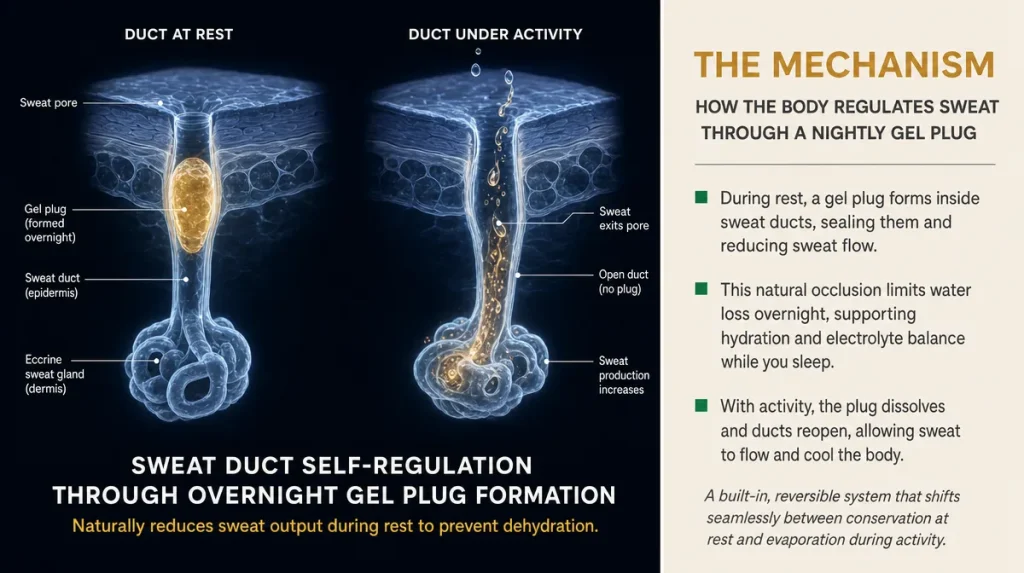
Sweat glands are least active during sleep, which means skin applied to at bedtime gets several uninterrupted hours for the plug to form. Compare it to letting wood glue cure overnight rather than pressing two boards together for thirty seconds and hoping. By morning, the seal set overnight does most of the work, and a light reapplication after a shower is really just a touch-up, not round one.
The common mistake is the opposite order: a hurried application right after a hot shower, when skin is warm, pores are open, and the body is about to become more active for the day. That is the least favorable moment for the chemistry to do its job, even though it is the most convenient one.
Finding The Right Amount: More Is Not Stronger
It is tempting to think a heavier layer means stronger protection. In practice, extra product beyond a thin, even film tends to sit on the surface rather than bond with it, which is why it rubs off on sleeves and leaves white marks on dark fabric without necessarily blocking more sweat.
A useful self-test: ten minutes after applying, run two fingers lightly across the underarm. If the skin feels tacky, clumped, or visibly coated, the amount was too heavy and more is being wasted than absorbed. A thin layer covering the entire underarm, including the sides where sweat glands are often densest, generally outperforms a thick dab applied only to the center.
Exfoliation And Clean Skin Before Applying
Residue from the previous day’s application, along with ordinary dead skin cells, can sit over duct openings before a fresh dose ever reaches them. A gentle wipe with a washcloth once or twice a week during a regular shower helps clear that buildup without irritating the skin.
Shaving timing matters too. Applying any antiperspirant to skin that has just been shaved can sting and may reduce how well the product sits, since the surface is temporarily irritated and more permeable than usual. Waiting a few hours after shaving, or shaving the night before rather than the same morning, tends to give better results with the exact same product already in the cabinet.
Distinguishing A Product Problem From A Different Problem
Not every underarm issue is solved by better application technique. If clothing is soaking through despite dry, clean skin and consistent nighttime use, that pattern points toward excessive sweating rather than a weak formula. Mayo Clinic’s general patient information on hyperhidrosis describes this as a distinct condition worth discussing with a clinician rather than something to fix by rotating through drugstore products.
Odor without heavy sweating is usually a separate issue tied to bacteria on skin and in fabric, not the strength of the antiperspirant. In that case, the more useful changes are often in laundry routine and fabric choice rather than the deodorant itself.
What Marketing Claims Actually Mean Versus What To Look For
A “48-hour protection” claim on a label typically reflects a single controlled application under lab conditions, not a guarantee under a humid commute or a workout. A 2021 study in the Journal of Cosmetic Science examining antiperspirant efficacy under real-world movement found that measured sweat reduction varied considerably based on application conditions, not just formula concentration.
Fragrance intensity is not a reliable stand-in for effectiveness either; a stronger scent only masks odor temporarily and says nothing about how well the active ingredient is bonding with skin. The more productive habit is trusting the technique already covered here and giving an existing product a fair two-week trial before assuming it has failed.
Climate Adjustments: Humid Summers And Dry Winters
A humid East Coast summer changes the math. Even with a correct nighttime routine, heavy midday sweating can overwhelm the seal faster than usual, and a light midday reapplication to already-sweaty skin will not seat properly until the skin is patted dry first. Carrying a small towel for exactly that purpose is a simple fix many people skip.
Dry winters, especially with indoor heating running constantly, tend to be more forgiving. The same nighttime application can comfortably last a full day or longer, since there is less moisture undoing the seal. Adjusting expectations by season, rather than assuming a product has gotten weaker, saves a lot of unnecessary product switching.
A Two-week Technique Reset
Before deciding that a clinical strength deodorant has failed, it is worth running a genuine two-week test of technique rather than formula. Move application to the night before bed, onto skin that is completely dry and at least a few hours past any shaving. Use a thin layer across the whole underarm rather than a thick dab in the center, and skip any morning reapplication unless skin feels damp first.
Add a gentle exfoliation once or twice during the two weeks, and note any days where heavy exertion or heat genuinely called for a midday touch-up on dry, toweled skin. Most people find the product they already own performs noticeably better once these conditions are consistently met, which is a cheaper and faster answer than restocking the shelf.
Key Takeaways
- Apply at night to dry, unshaven skin, giving the active hours of undisturbed contact before morning.
- Use a thin, even layer across the whole underarm rather than a thick dab in the center.
- Exfoliate the area once or twice a week to clear residue that can block ducts.
- Treat marketing claims like “48-hour protection” as lab conditions, not guarantees, and judge results by a fair two-week trial instead.
- Heavy sweating that soaks through clothing despite good technique is a different issue worth discussing with a clinician, not a reason to keep switching products.
This article is general information and does not replace advice from a dermatologist or physician.
Individual results vary depending on skin, activity level, and climate.